
Click and Grow Smart Garden Review
Click and Grow smart garden review for beginners: setup, plant quality, maintenance, cost, and whether this countertop system is worth buying.
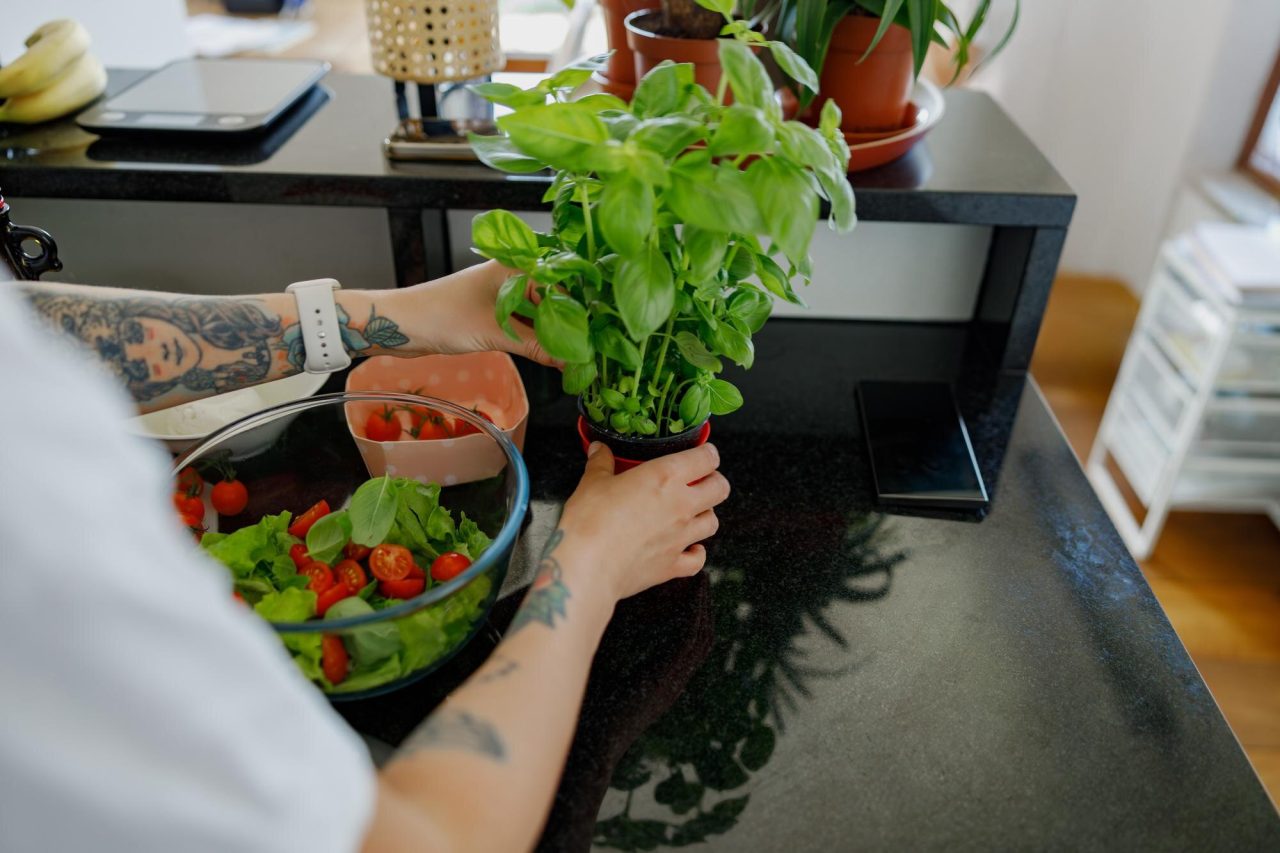
A lot of indoor gardens promise fresh basil on your counter with almost no effort. The reason so many people search for a click and grow smart garden review is simple – they want to know whether this is actually an easy way to grow food indoors, or just a nice-looking gadget.
The short version is that Click and Grow works well for the right buyer. It is one of the most beginner-friendly countertop gardens on the market, and that matters if you want herbs and greens without learning hydroponics from scratch. But convenience comes with tradeoffs, especially around pod cost, plant flexibility, and long-term value.
Click and Grow smart garden review: who it fits best
Click and Grow is built for people who want a guided system, not a customizable grow setup. If your goal is to put a compact garden in the kitchen, add water once in a while, and harvest herbs without dealing with soil, it does that job very well.
It is especially appealing for apartment dwellers, busy households, and first-time growers who do not want to manage nutrients, pH, or lighting schedules manually. The design is clean, the instructions are simple, and the learning curve is low.
Where it fits less well is with shoppers who want maximum harvest volume or lower long-term growing costs. If you plan to grow a lot of lettuce, experiment with different varieties, or avoid brand-specific refills, Click and Grow can start to feel limiting.
What the Click and Grow system is actually like
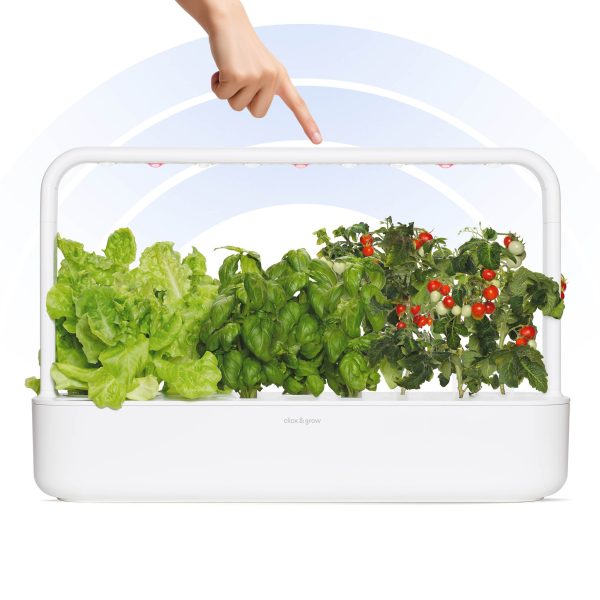
Most shoppers are looking at the Smart Garden line, especially the smaller countertop units. The basic idea is straightforward: you insert pre-seeded pods, fill the reservoir, plug in the light, and let the system handle the day-to-day routine.
That simplicity is the main selling point. You do not need potting mix scattered across the kitchen, and you do not need much plant knowledge to get started. For many households, that is the difference between using the garden every week and letting it sit in a closet after one failed attempt.
The light setup is also easy for beginners. There is no guessing about whether your windowsill gets enough sun, and no need to buy a separate lamp. The integrated grow light gives plants more consistent conditions than a typical kitchen counter near a window.
The reservoir design is similarly low stress. You add water, monitor the level, and do some basic cleanup, but this is not a high-maintenance hydroponic system. That ease is a real advantage if your priority is convenience.
Setup and day-to-day use
Setup is one of the strongest parts of the experience. Most users can get the garden running in minutes. There is no complicated assembly, no pump calibration, and not much to troubleshoot.
In daily use, Click and Grow feels closer to an appliance than a hobby system. That is good if you want predictable routines. It is less exciting if you enjoy tinkering and optimizing plant performance.
Maintenance usually comes down to adding water, trimming plants, and removing older pods when they finish producing. Compared with larger hydroponic gardens, it is very approachable. Compared with a simple pot of herbs in a sunny window, it is more structured and usually more reliable.
One practical point: these gardens are easy to place, but you still need to think about height. The footprint is small, yet the light arm and plant growth mean you need vertical clearance under cabinets.
How well do the plants grow?
For herbs and small greens, Click and Grow generally performs well. Basil, parsley, lettuce, and similar crops are where the system makes the most sense. Germination is usually dependable, and the growth rate is good enough to satisfy casual home use.
This is not the best choice for larger edible crops or heavy harvest expectations. You can grow some compact fruiting plants in certain models, but the experience is usually strongest with herbs, salad greens, and smaller plants that match the pod format.
Plant quality also depends on expectations. If you cook a few times a week and want fresh garnish herbs or small salad additions, the harvest can feel very convenient. If you are hoping to replace store-bought greens in a meaningful way, the output from a small countertop unit may feel modest.
That is one of the biggest gaps between marketing and real household use. Click and Grow can absolutely produce useful herbs, but most smaller models are not designed to feed a family from one countertop.
The biggest advantage: very low friction
The reason Click and Grow remains popular is not that it grows more than every competitor. It is that it removes friction.
There is less mess than soil pots. There is less guesswork than DIY hydroponics. There is less intimidation than larger systems with more settings and more moving parts. For beginners, those points matter more than raw performance.
If you have ever bought fresh basil, used half, and thrown the rest away a week later, a small smart garden can make sense. It puts small amounts of fresh produce within reach, right where you cook.
This is also a good fit for people who need a tidy system. The look is clean, the footprint is manageable, and it blends into modern kitchens better than many bulkier grow systems.
The main drawbacks to consider
The biggest drawback is cost over time. The garden itself is easy to justify if you value convenience, but replacement pods are where the system gets more expensive than it first appears.
That does not mean the pods are a bad deal for everyone. If you want a very guided experience and do not mind paying for simplicity, the extra cost may be worth it. But if you compare it with buying seeds, reusable growing media, and nutrients for an open hydroponic setup, Click and Grow is clearly less flexible and often pricier per plant.
The second drawback is limited control. Some users like that everything is pre-packed and standardized. Others will quickly wish they could adjust nutrients, spacing, or pod choices more freely.
The third issue is capacity. A compact unit looks great on a counter, but it can only do so much. If your household wants frequent salads or multiple herbs at once, you may outgrow a smaller model fast.
Is it worth the price?
This is where the answer depends on what you are buying it for.
If you are buying Click and Grow as a low-maintenance kitchen convenience product, the value is solid. It saves time, reduces mess, and makes indoor growing feel approachable. For many first-time buyers, that is exactly the point.
If you are buying it as the cheapest way to grow food indoors, it is not the best value. There are more cost-effective systems, especially if you are willing to manage nutrients yourself or use generic supplies.
If you are buying it as a gift, the value improves again. The setup is friendly, the design feels polished, and the learning curve is gentle. That makes it easier to recommend than more technical hydroponic units.
Click and Grow vs other smart gardens
Compared with many competing countertop gardens, Click and Grow usually wins on simplicity and design. It tends to lose on flexibility and sometimes on harvest value per dollar.
Some alternatives offer larger reservoirs, more pod spaces, or stronger lighting at similar prices. Those can be better if your main goal is output. But they also may ask more from the user in setup, nutrient management, or cleaning.
So the choice comes down to whether you want a guided system or a more involved one. Click and Grow is usually the safer recommendation for true beginners. It is not always the best recommendation for budget-focused shoppers or heavy users.
Final verdict on this click and grow smart garden review
Click and Grow is a good product with a very specific strength: it makes indoor growing feel easy enough to stick with. That alone gives it real value in homes where traditional gardening has already failed once or twice.
It is best for beginners, casual herb growers, gift buyers, and anyone who wants a clean countertop system with very little setup friction. It is less compelling for shoppers who care most about lower refill costs, bigger harvests, or broader plant flexibility.
If you want the simplest path to fresh herbs indoors, Click and Grow is easy to recommend. If you want the most food for your money, look a little harder before you buy. The right smart garden is not just about what grows well – it is about what you will actually keep using.
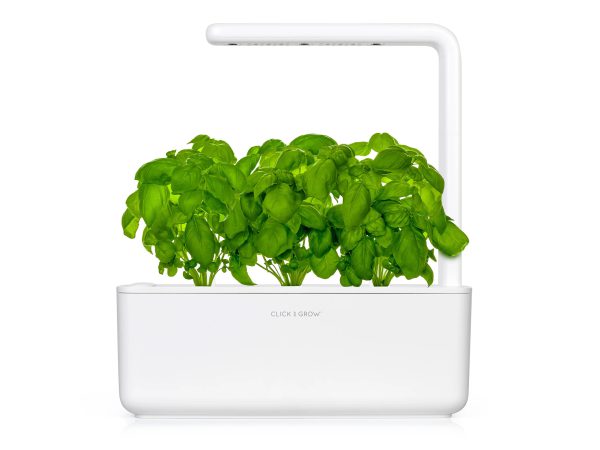

Smart Garden 3
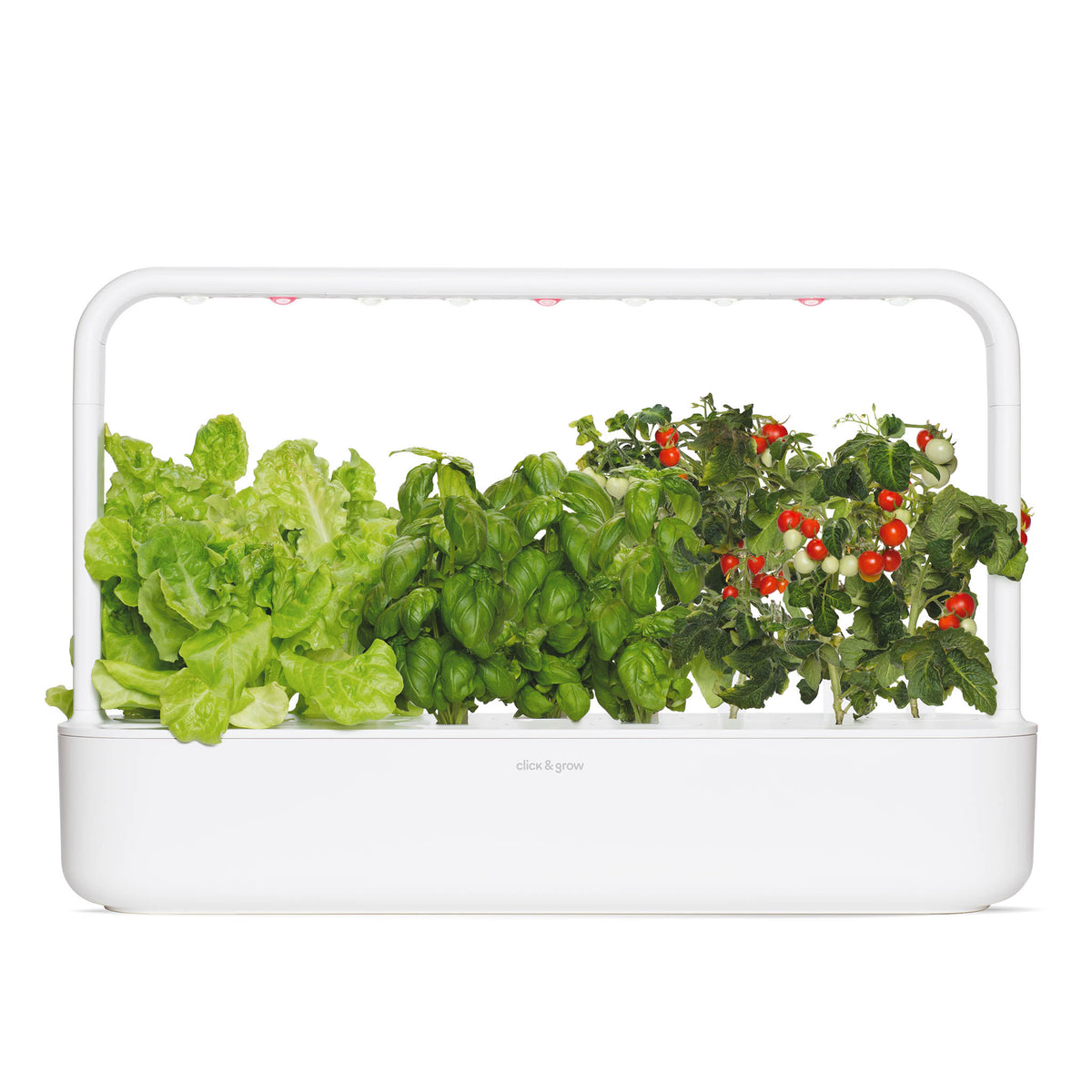
Smart Garden 9
Smart Garden 9 PRO
Click & Grow 25
-
What should beginners compare first?
Start with the garden size, plant capacity, water routine, and whether the system uses pods, grow sponges, hydroponics, smart soil, or another method.
-
Which plants are easiest indoors?
Herbs and leafy greens are the safest first choices because they grow quickly, tolerate regular trimming, and are useful in everyday cooking.
-
Do indoor gardens still need maintenance?
Yes. Even automated systems need water checks, pruning, cleaning between cycles, and realistic spacing for larger plants.
Related Posts
8 Best Hydroponic Systems for Beginners
Compare the best hydroponic systems for beginners by size, price, harvest capacity, and upkeep so you can choose an easy indoor garden with confidence.
7 Best Indoor Gardens for Leafy Greens at Home
Compare the best indoor gardens for leafy greens by capacity, space, upkeep, and cost, then choose a system that keeps salads coming at home year-round.
10 Best Hydroponic Herbs for Beginners to Grow
Find the best hydroponic herbs for beginners, from fast basil to forgiving mint, plus practical tips for lights, spacing, harvests, and upkeep at home.